Providence, Rhode Island · Since 1923
The Global Campus of Providence Country Day School
Helping international students achieve a brighter future, through an American education delivered online by PCD teachers.
Explore Growth Compass
Accredited and recognized by

A Rich 100-Year History
Supporting Students
Curriculum Designed for Online
Learning & International Students
Native English-Speaking
Subject Area Expert Teachers
Explore Your Study Options
Explore study options with different purposes, from a single course to a full diploma. Each is delivered online by Providence Country Day School teachers and supported by the Hudson Global Scholars network.
US Dual Diploma
Full Diploma Program
Advanced Placement (AP) Courses
University-Credit Courses
How Learning Works
Three teaching models, one standard of teaching
Every course is taught online by PCD teachers. The proposed learning plan sets out the teaching format, schedule, workload, support and fees for each student.
Asynchronous, Self-Paced Study
Students work through online learning materials and assignments at times that fit their schedule, within the course’s agreed deadlines.
Teacher feedback and questions are handled as the course progresses, so study time can move around training, family commitments and local school.
Live Group Instruction
Scheduled teaching sessions provide explanation, discussion and interaction with classmates from other countries.
PCD sets the schedule for these sessions. Live classes offer the real-time interaction of a traditional classroom, including discussion and collaboration.
Individual Instruction
One hour (per course) of individualized instruction each week supplements self-paced learning, with regular check-ins to keep students on track.
This model suits students preparing for Advanced Placement or university-level work. Students may start at any point in the school year.
Project your progress
See how study habits turn into skills
Move the levers to explore an illustrative school year. Each habit adds to a different skill, so you can see where time and consistency pay off most.
Overall momentum
41%
Building momentum
Weekly study time
40%
Hours you can protect each week for course work
Live session attendance
40%
How many scheduled sessions you join
Assignments on time
50%
Work handed in by the agreed deadline
Teacher feedback applied
25%
Acting on the comments you receive
Skills built along the way
Academic writing
40%
Critical thinking
34%
Independent study
46%
Time management
46%
Communication
38%
An illustrative planning model for these teaching models, not a prediction of grades or admission outcomes.
Explore a Learning Path
See how a plan comes together
Choose a grade and an area of interest to see an example pathway. It shows how courses, exams, activities and review points fit together over time.
Grade Level
Area of Interest
Illustrative Path — Grade 10 · Academic Excellence
Diploma Pathway
US Dual Diploma — 3-year pathway
Sample Courses
English, World History, Economics, Psychology
AP Courses
One AP course, if the student is prepared for college-level reading and writing.
Activities & Next Steps
Take a leadership role in a club; enter a regional academic competition.
Advisor Review
Review workload balance and AP readiness with an advisor.
Illustrative only. Every plan depends on readiness, prior coursework, school requirements and advisor guidance.
Discuss a PlanGrowth Compass
How Growth Compass Supports Students
Every PCD Global Campus student joins the Hudson Global Scholars network, with access to Growth Compass: the platform connecting students, parents, teachers and advisors so guidance reaches every part of a student’s learning experience.
Understand Yourself
Explore interests, strengths and learning habits to identify what matters to the student.
Plan With Guidance
Students, families and advisors connect goals with suitable courses and study options.
Explore the Options
Course catalogues, university exploration and planning tools in one place.
Review and Move Forward
Reflect on progress, recognise growth and adjust the plan as goals evolve.
From Fragmented Data to Integrated Intelligence
Scattered information converges into one connected student profile.
Disconnected
Growth Compass
Student Profile
Integrated
Students, parents and advisors share one view of progress, so support arrives before problems become obstacles.
University Pathways
Ambitions, mapped course by course
Students plan for university study in the United States, Europe and beyond, with a pathway shaped around their destinations, subject interests and readiness.
1. Begin With the American Diploma
The US high school diploma gives students an internationally recognised academic record. Advisors explain how PCD qualifications align with the entry requirements of the countries and universities a student is considering.
2. Choose Courses With Purpose
Course selection should reflect what a student wants to study and where. Plans combine diploma requirements, relevant subjects, English Language Learning where needed, and AP or university courses when appropriate.
3. Prepare Applications
Students receive guidance on university research, application requirements, timelines and supporting documents, with the level of application support set out in the agreed advising plan.
Entry requirements vary by country, university and degree program. Eligibility depends on the complete academic record and on any required subjects, grades, examinations, language qualifications or credential evaluations. Each university makes its own admissions decisions.
University Outcomes
Our alumni have gone on to attend top-tier universities
Graduates of Providence Country Day School progress to universities across the United States, the United Kingdom, Canada and Europe.
Insights
Reading for families and schools
Perspectives on student development, learning habits, study planning and university choices.

Three Good Things: The Smallest Gratitude Practice That Survives Exam Season
November is the month students stop noticing what is going well. One ten-minute nightly habit, tested in randomised trials, was built for exactly this window.
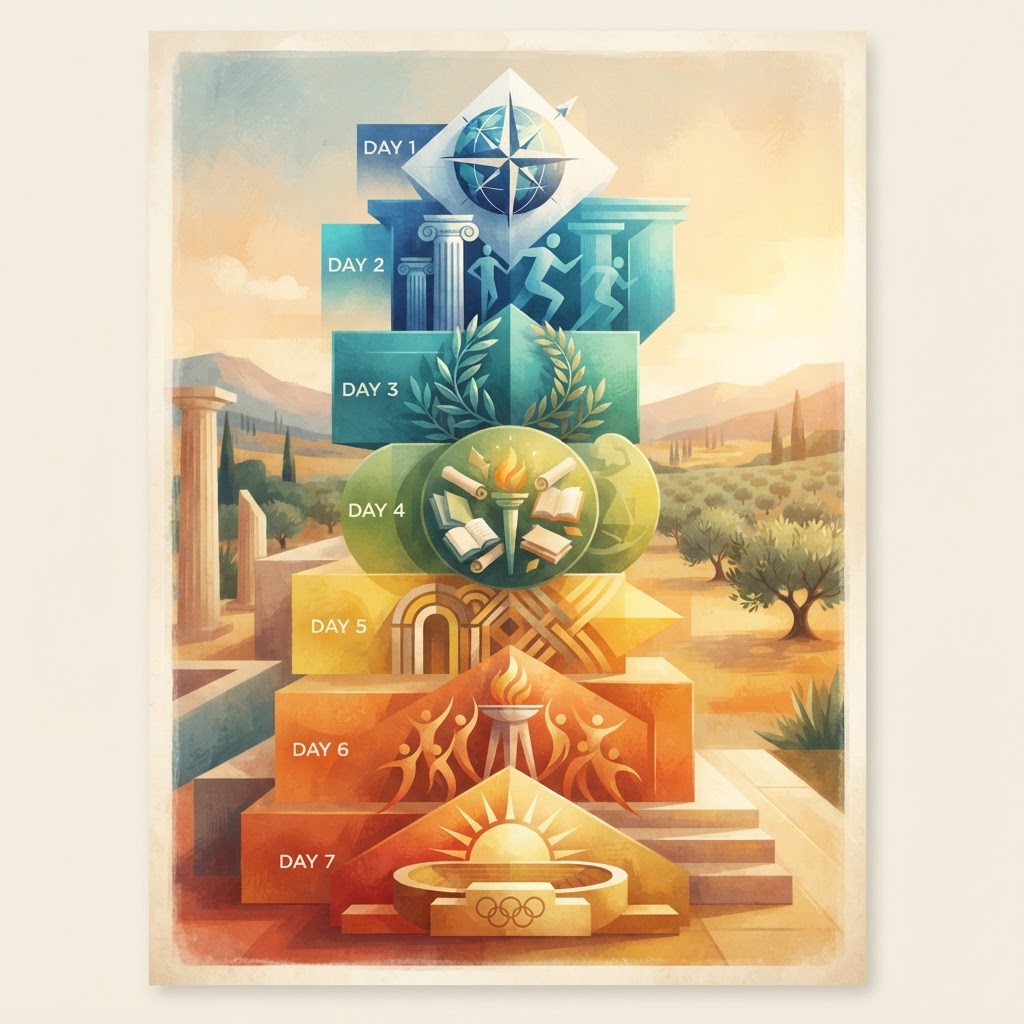
Inside the Global Leadership Journey: A Day-by-Day Look at the International Olympic Academy Experience
Curious about what actually happens during the seven-day Global Leadership Journey in Ancient Olympia? Discover how daily reflections, group challenges, and Olympic values shape this transformative experience for high school students.
Why the Future of Cities—and the Next Decade of Careers—Belongs to People Who Know How to Make Us Stay
Cities have spent decades optimising for peaks and throughput: rush-hour towers on weekdays, fortress stadiums on weekends, dead space in between. Two landmark Gensler 2026 studies show the real currency is dwell time — and that almost nobody is trained to design for it.
Questions